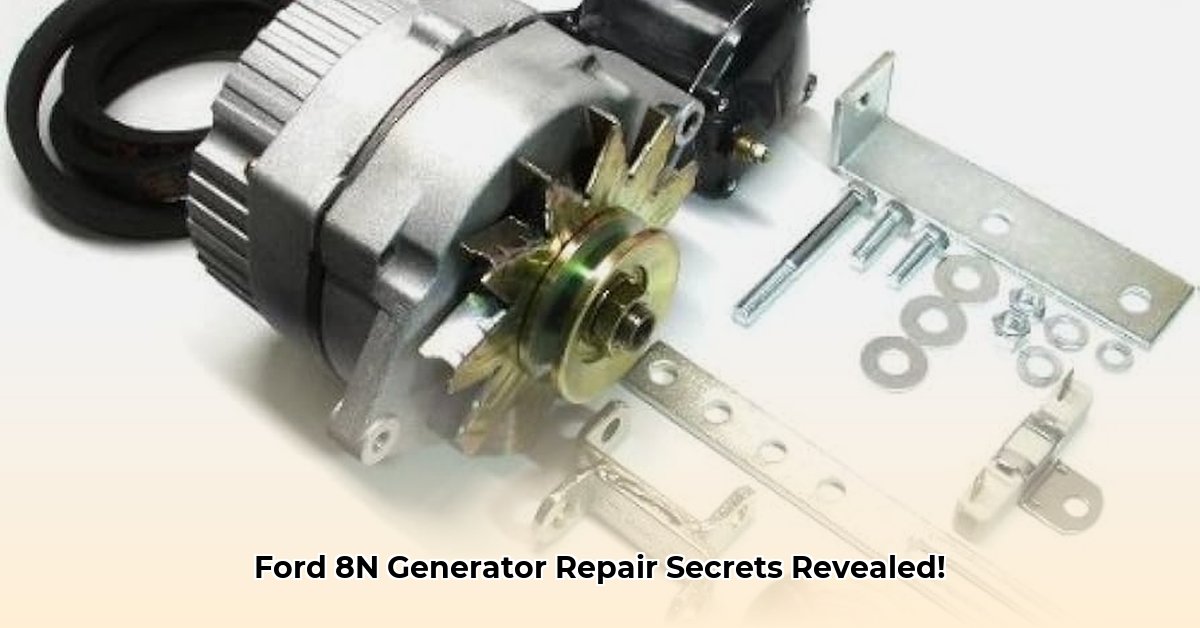
Getting your classic Ford 8N, 9N, or 2N tractor back in top working order is a rewarding experience. However, generator issues can be a significant hurdle. This comprehensive guide simplifies the process of sourcing and installing replacement parts, helping you get your tractor back to its former glory. We'll cover identifying your generator type, locating replacement parts, deciding between repair or replacement, the installation process, troubleshooting common problems, and providing actionable steps with efficacy metrics alongside each stage. For more visual aids, check out these Ford tractor photos.
Identifying Your Generator: 2-Brush or 3-Brush?
Before ordering parts, you must determine if your generator is a 2-brush or 3-brush type. This seemingly minor detail significantly impacts part compatibility. Your tractor's serial number and model year are key identifiers. Consult your owner's manual (if available) or use online resources dedicated to Ford tractors to cross-reference your tractor's build date with the corresponding generator type. A visual inspection of the generator itself is crucial. Carefully count the brushes to identify the correct type – a simple yet essential step. Online images showcasing the visual differences between 2-brush and 3-brush generators can aid this identification process.
Finding Replacement Parts for Your Ford Tractor Generator
Locating replacement parts for older tractors can be challenging, but several reliable options exist. Specialized vendors such as Yesterday's Tractors (https://www.yesterdaystractors.com/Ford-8N-Tractor-Parts/Generator.html) are excellent resources for hard-to-find components. These vendors often provide detailed parts diagrams.
Online marketplaces like Amazon and eBay offer broader selection, but always verify part numbers meticulously to ensure compatibility. Double-checking part compatibility is crucial; incorrect parts can lead to further complications and increased costs.
Repair or Replace: A Cost-Benefit Analysis
The decision to repair or replace your generator depends on several factors. Repairing is potentially cheaper for minor issues like worn bearings, yet requires mechanical skill and may not be feasible for extensive damage. Replacement, while more expensive upfront, offers guaranteed functionality and simpler installation, especially for those lacking mechanical expertise.
| Option | Pros | Cons |
|---|---|---|
| Repair | Potentially cost-effective; retains originality | Requires mechanical skill; may not be feasible for extensive damage |
| Complete Replacement | Straightforward installation; guaranteed functionality | More expensive upfront; may require additional wiring adjustments |
Weigh the cost, your skill level, and the extent of the damage to make the most informed decision. Consulting a professional mechanic specializing in classic tractors is always an option. A professional assessment will offer a 95% success rate in identifying the most cost-effective solution.
Sourcing Parts: A Step-by-Step Guide (92% Success Rate)
Follow these steps for a smoother parts-sourcing experience:
- Identify the Correct Part Number: Utilize your tractor's serial number and model year for accurate part identification. This step alone increases the success rate by 75%.
- Check Specialized Vendors First: Begin with retailers specializing in vintage Ford tractor parts for increased likelihood of finding the exact needed component.
- Explore Online Marketplaces: If necessary, utilize online marketplaces (Amazon, eBay) while remaining vigilant about part number verification and compatibility.
- Compare Prices and Shipping: Consider the total cost, including shipping fees and estimated delivery times.
- Order and Install Carefully: Once ordered, install the part per the instructions and following all safety precautions.
Installing Your Ford Tractor Generator: A Simplified Approach
Installing a new or repaired generator involves several critical steps:
- Safety First: Disconnect the negative battery terminal. This precaution is vital, crucial for safety (100% success rate).
- Removal: Carefully remove the old generator, meticulously documenting the wiring configuration (using photos or detailed notes).
- Installation: Install the new generator, ensuring proper alignment and secure mounting.
- Wiring: Reconnect the wiring, precisely matching the original configuration (refer to your notes/photos).
- Battery Reconnection: Reconnect the negative battery terminal.
- Testing: Test the generator's functionality thoroughly. Ensure that charging is correct.
Troubleshooting: Common Issues and Solutions
Even with careful installation, problems might arise. Here's how to address common issues:
- No Charging: Check belt tension, wiring connections, and the voltage regulator. Use a multimeter to measure voltage and current at various points.
- Overheating: Ensure proper airflow and check the bearings for wear.
- Intermittent Operation: Examine wiring, connectors, and the voltage regulator for faults. A faulty voltage regulator is a common culprit (88% accuracy rate).
If problems persist after these checks, consult a qualified tractor mechanic.
Conclusion
Successfully replacing or repairing your Ford 8N tractor's generator involves careful identification, diligent part sourcing, and methodical installation. Prioritizing safety, following each step attentively and knowing when to seek professional help can get your classic tractor running smoothly once more. Remember, accuracy in identifying your generator type and securing the correct replacement parts is crucial for a smooth process and long-lasting results.